
Nibelungenlied
Medieval German epic based on oral heroic legend.

Unknown author · Public domain
It is based on an oral tradition of Germanic heroic legend with origins in historic events and individuals of the 5th and 6th centuries, and it was the first heroic epic put into writing in the German vernacular, helping to found a larger genre of written heroic poetry there.
- Language
- Middle High German
- Genre
- Heroic epic
- Region of origin
- Passau (likely)
- Also known as
- Der Nibelunge liet or Der Nibelunge nôt
- Manuscripts extant
- 37 known manuscripts and fragments
Lore & Background
The poem is split into two parts. In the first part, the prince Siegfried comes to Worms to acquire the hand of the Burgundian princess Kriemhild from her brother King Gunther. Gunther agrees to let Siegfried marry Kriemhild if Siegfried helps Gunther acquire the warrior-queen Brünhild as his wife. Siegfried does this and marries Kriemhild; however, Brünhild and Kriemhild become rivals, leading eventually to Siegfried's murder by the Burgundian vassal Hagen with Gunther's involvement.
Reader's Guide
Dubbed the 'German Iliad', it began a new life as the German national epic. The poem was appropriated for nationalist purposes and was heavily used in anti-democratic, reactionary, and Nazi propaganda before and during the Second World War. Its legacy today is most visible in Richard Wagner's operatic cycle Der Ring des Nibelungen, which, however, is mostly based on Old Norse sources. In 2009, the three main manuscripts of the Nibelungenlied were inscribed in UNESCO's Memory of the World Register. The poem's tragedy appears to have bothered its medieval audience, and very early on a sequel was written, the Nibelungenklage, which made the tragedy less final. Scandinavian parallels are found especially in the heroic lays of the Poetic Edda and in the Völsunga saga.
Did You Know?
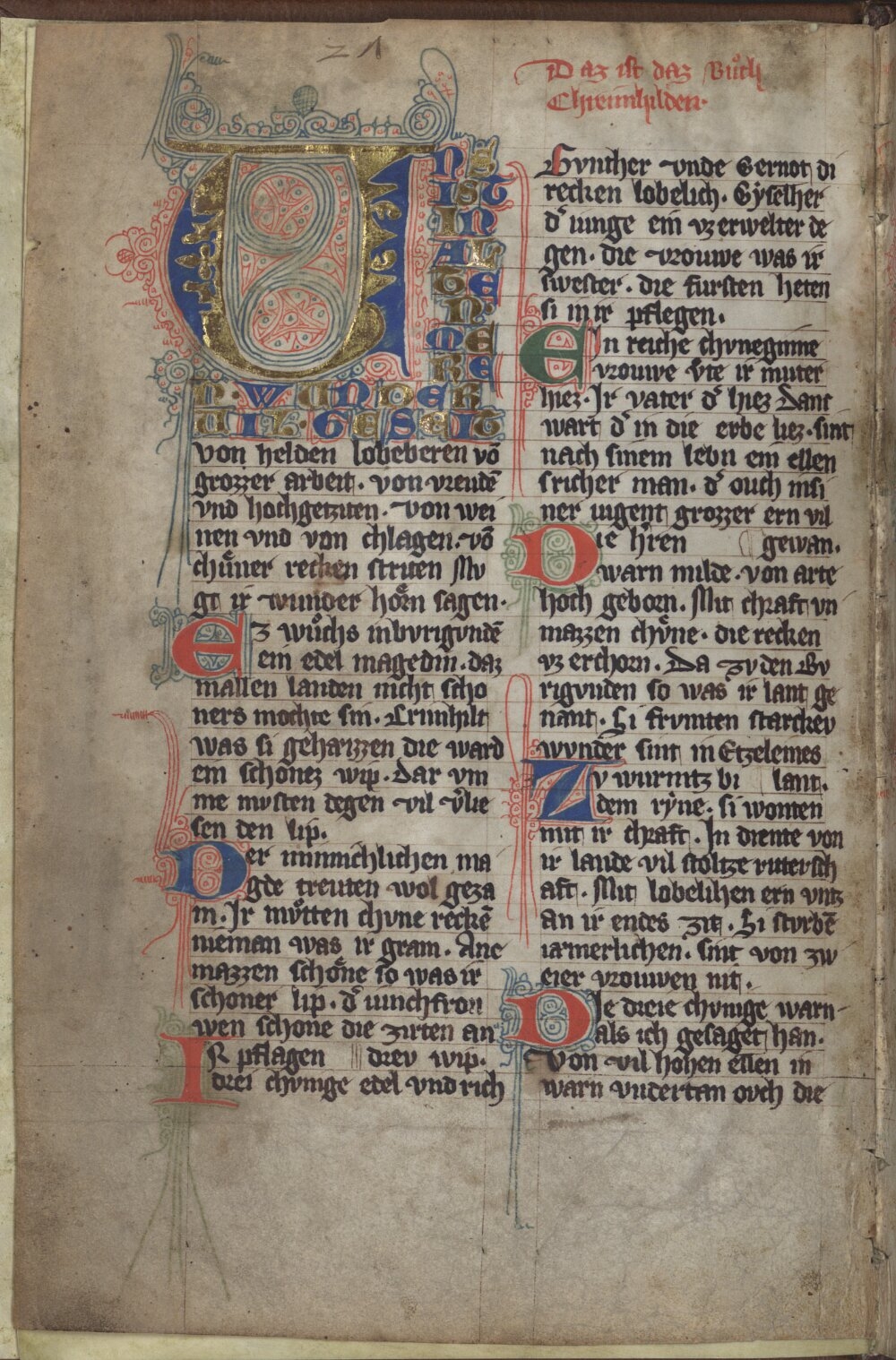
- The poem's opening stanza is thought to be an addition by the adaptor of the *C version and does not appear in manuscript B.
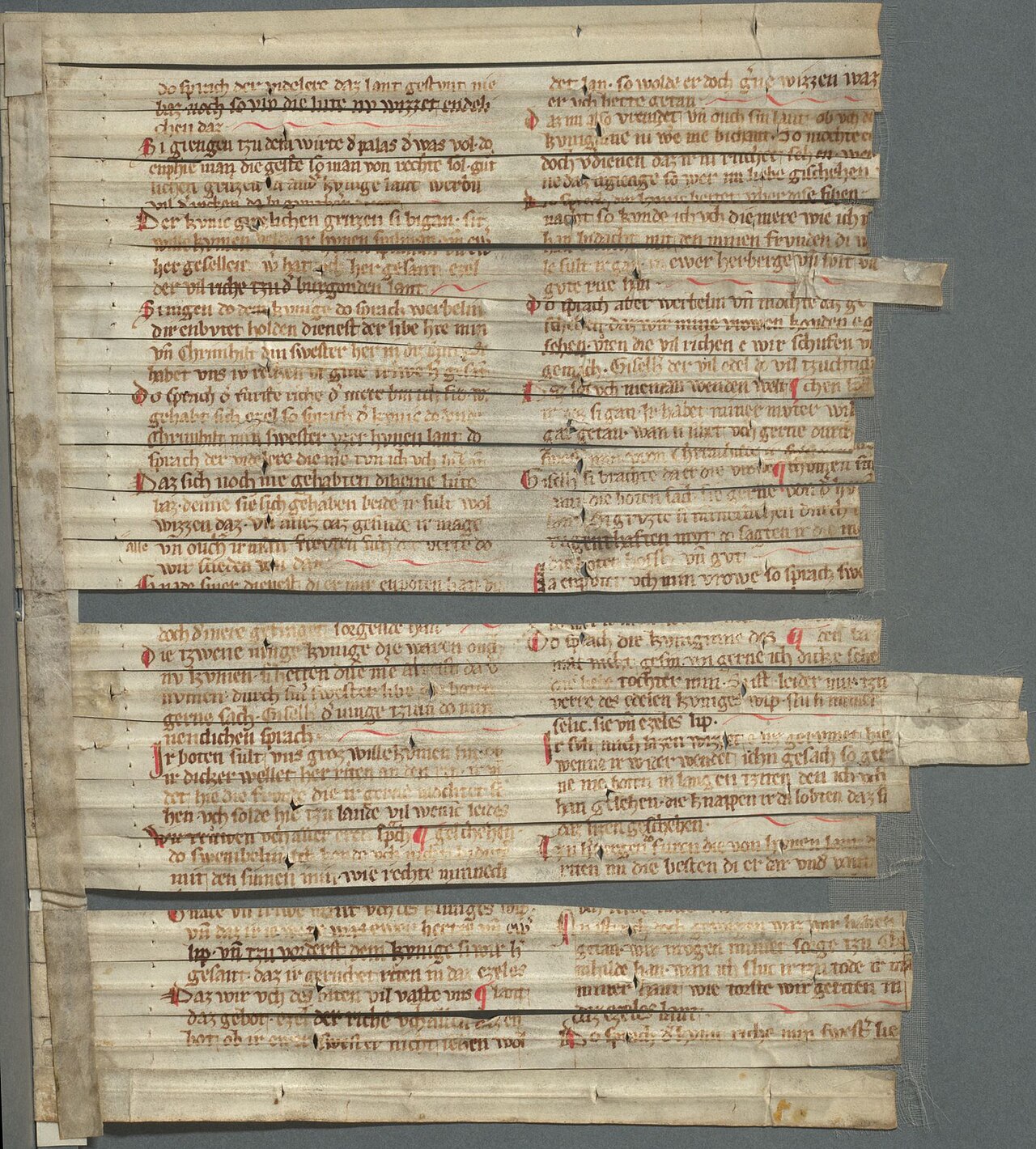
- There are 37 known manuscripts and manuscript fragments of the Nibelungenlied and its variant versions.
- The *C version is clearly a reworking of an earlier version, but it is not clear if this version was *AB.
Composition and the Manuscript Tradition
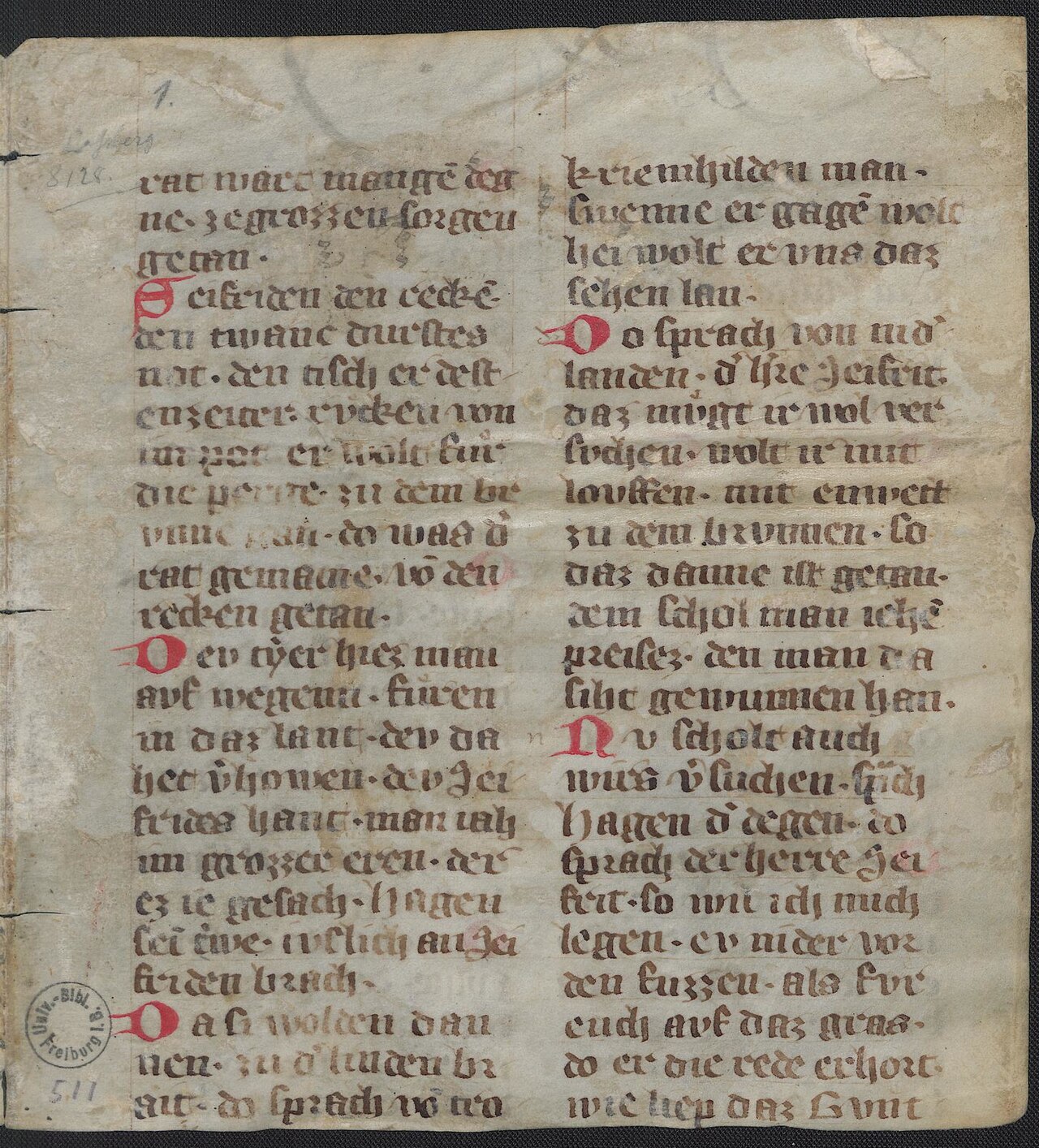
The Nibelungenlied was composed around 1200 in Middle High German by an anonymous poet likely hailing from the Passau region. What makes its textual history remarkable is the sheer volume of surviving witnesses: thirty-seven manuscripts and fragments are known, eleven of them essentially complete and twenty-four in various fragmentary states, including one Dutch version designated manuscript T. Scholars have traditionally identified two primary recensions circulating near the time of composition—the Not-version, attested by manuscripts A (c. 1275–1300) and B (c. 1233–1266), and the Lied-version, represented by manuscript C (c. 1225–1250) and most of the earliest fragments. By 1300, at least five distinct versions were in circulation, including two mixed versions that blended elements of both recensions. While exact wording, stanza inclusion, and phrasing shift between witnesses, the broad sequence of events, character introductions, actions, and speech content remain relatively stable across pre-1400 versions. Most scholars assume manuscript B sits closest to the original Not-version, though Jan-Dirk Müller has argued the poem always existed in variant forms, linking this fluidity to the transition from oral to literate transmission.
Narrative Architecture and the Two-Part Tragedy
The poem is divided into two major sections that together trace a trajectory from courtly romance to catastrophic retribution. In the first part, the hero Siegfried arrives in Worms seeking the hand of the Burgundian princess Kriemhild. Her brother, King Gunther, conditions the marriage on Siegfried's assistance in winning the warrior-queen Brünhild for himself. Siegfried accomplishes this task and the two couples are united, but Brünhild and Kriemhild quickly become bitter rivals. This tension culminates in Siegfried's murder, carried out by the Burgundian vassal Hagen with Gunther's involvement. The second part shifts to Kriemhild's widowhood and her marriage to Etzel, king of the Huns. She orchestrates an invitation for her brother and his court to visit Etzel's realm with the explicit intention of killing Hagen. The resulting vengeance is total: every Burgundian who came to Etzel's court perishes, Etzel's kingdom is destroyed, and Kriemhild herself dies. Notably, the celebrated opening stanza is absent from manuscript B and is thought to be an addition by the adaptor of the *C version, possibly inspired by the prologue of the Nibelungenklage.
Roots in Germanic Oral Tradition
The Nibelungenlied did not spring fully formed from a single author's imagination; it is the written crystallization of a vast oral tradition of Germanic heroic legend. This tradition draws on historic events and individuals from the fifth and sixth centuries and had spread across virtually all Germanic-speaking Europe by the time the poem was committed to verse. The closest Scandinavian parallels appear in the heroic lays of the Poetic Edda and in the Völsunga saga, suggesting a shared mythological substrate that predated the written German text. The poem's material also shows connections to the Old Norse Þiðreks saga and to the early modern German Lied vom Hürnen Seyfrid, particularly in later manuscripts m and n, which contain a story of Siegfried's youth more closely aligned with those Norse and later German sources. This deep genealogical layering—oral formula, cross-linguistic diffusion, and eventual vernacular inscription—means the Nibelungenlied functions less as a single authorial creation and more as a snapshot of a living, evolving heroic culture transmitted across generations and borders long before any scribe set down the first stanza.
Rediscovery, National Myth, and Enduring Legacy
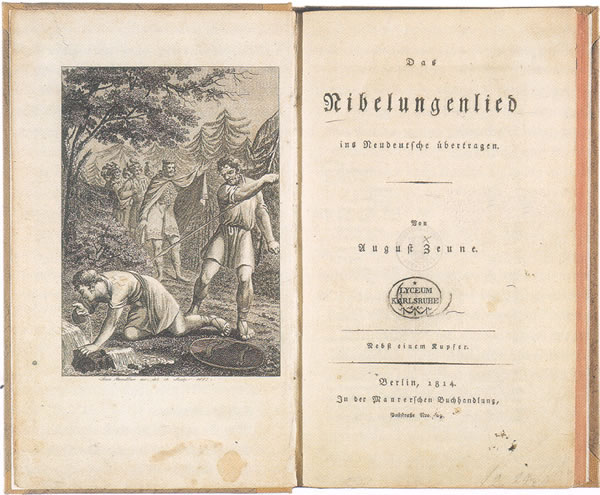
After falling out of circulation around 1500, the Nibelungenlied was rediscovered in 1755 and quickly earned the epithet 'German Iliad,' becoming the cornerstone of a national epic identity. This elevation, however, carried dangerous political consequences: the poem was appropriated for nationalist purposes and heavily exploited in anti-democratic, reactionary, and Nazi propaganda both before and during the Second World War. Its medieval audience, too, had been unsettled by the work's unrelenting tragedy; very early on, a sequel called the Nibelungenklage was composed to soften the finality of the catastrophe. In the modern era, the poem's most visible cultural legacy is Richard Wagner's operatic cycle Der Ring des Nibelungen, though Wagner drew primarily on Old Norse sources rather than the German text itself. In 2009, the three principal manuscripts were inscribed on UNESCO's Memory of the World Register in recognition of their historical significance. The work has been singled out as among the most striking and undeniably the most forceful of all medieval German epics, a testament to its enduring power across centuries of reinterpretation.
Gallery
Frequently Asked Questions
Who wrote the Nibelungenlied?
No named author survives, but the poet is generally thought to have been active in the Passau region. The work holds the distinction of being the earliest known heroic epic recorded in the German language.
What language is the Nibelungenlied written in, and how many copies exist?
The poem was composed in Middle High German. Thirty-seven manuscripts and fragments of the text are known to survive to this day.
How does the Nibelungenlied story end?
The narrative closes in catastrophic vengeance, as Kriemhild arranges the mass killing of the Nibelung heroes to exact revenge for the murder of her husband, Siegfried. The final scene is one of mutual annihilation rather than heroic triumph.
Why is the Nibelungenlied important to literary history?
By being the first major heroic epic committed to writing in the German vernacular, it laid the groundwork for a broader tradition of written German heroic poetry. It also preserves a window into much older Germanic oral traditions that predate the medieval period by several centuries.
More in Literary Novels And Classics 1-15
Spotted an error? Know more?
This is a living reference — every entry is fact-audited, and reader corrections feed straight into our audit queue. Suggest an edit · See this site's audit record