
Paradise Lost
A classic is a book accepted as being exemplary or particularly noteworthy.

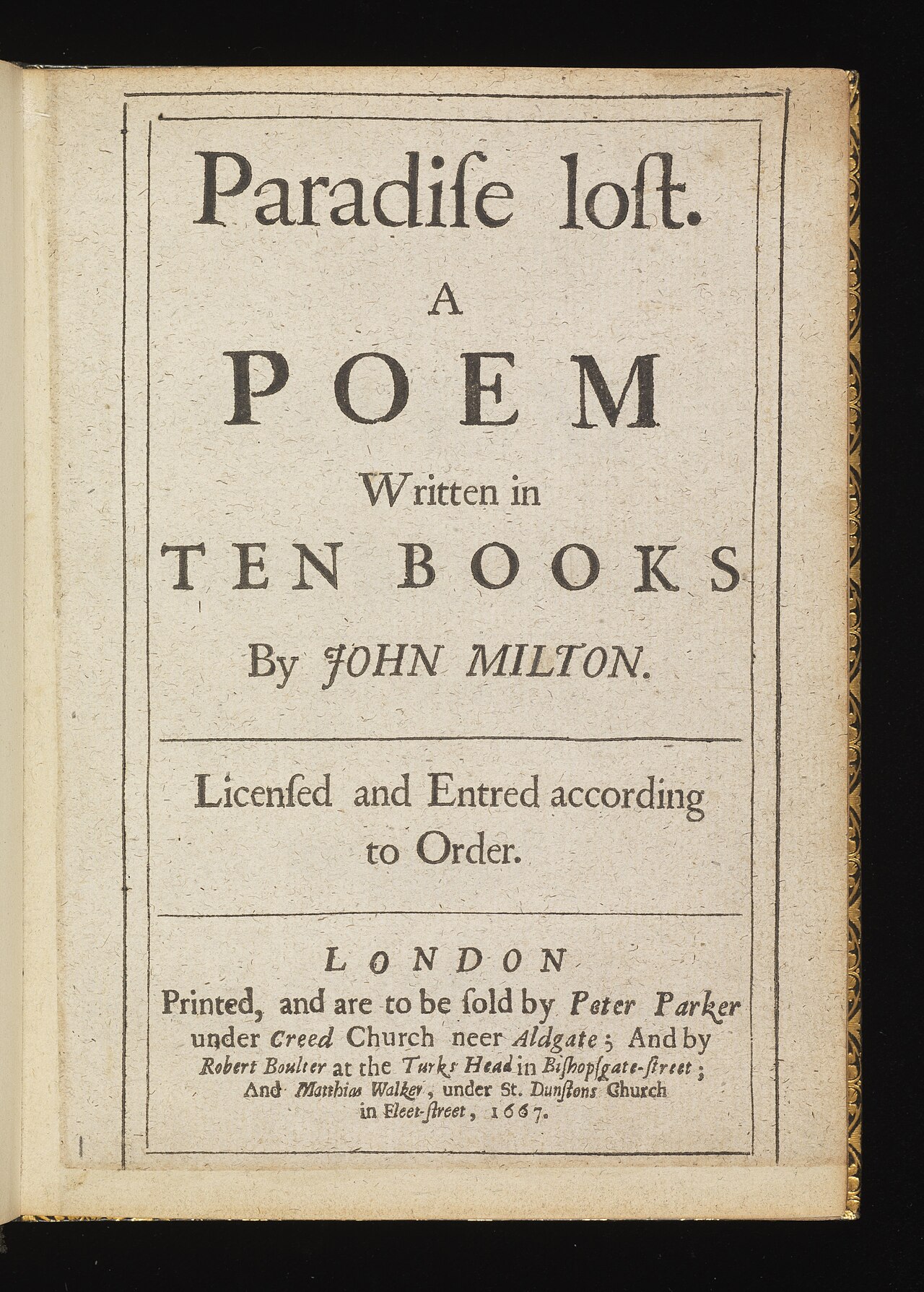
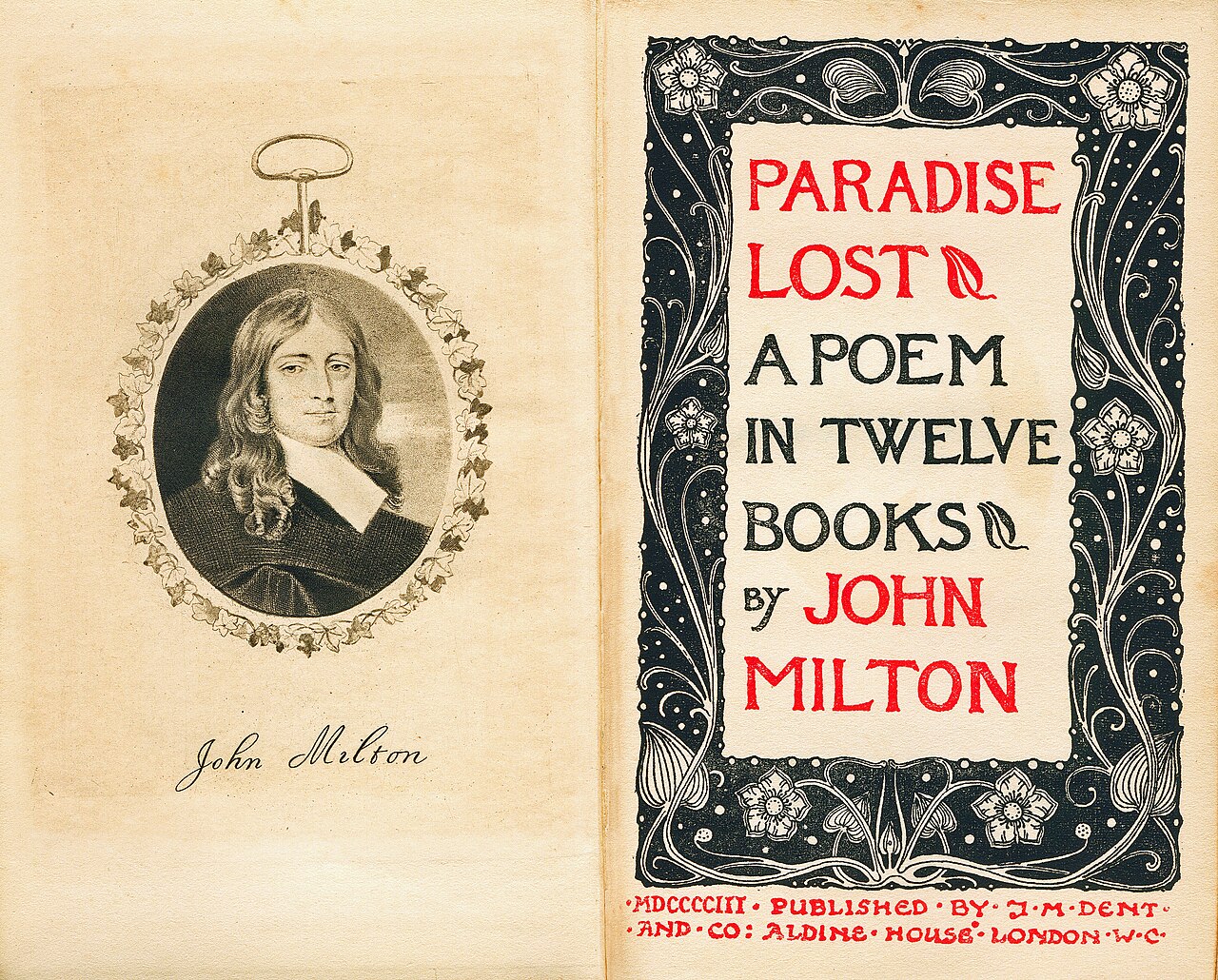
John Milton · Public domain
A classic is a book accepted as being exemplary or particularly noteworthy, usually of some chronological age since its original publications. What makes a book "classic" is a concern that has occurred to various authors ranging from Italo Calvino to Mark Twain. In his "Disappearance of Literature" speech given in 1900, Mark Twain said (referring to a learned academic's lofty opinion of Milton's *Paradise Lost*) that the work met the Professor's definition of a classic as "something that everybody wants to have read and nobody wants to read."
- field
- Poetry
- nationality
- English
- known_for
- Paradise Lost
Verified Timeline
Lore & Background
In 1920, Fannie M. Clark, a teacher at the Rozelle School in East Cleveland, Ohio, attempted to answer the question of what makes a book a "classic" in her article "Teaching Children to Choose" in *The English Journal*. Over the course of her essay, Clark considers the question of what makes a piece of literature a classic and why the idea of "the classics" is important to society as a whole. Clark says that "teachers of English have been so long trained in the 'classics' that these 'classics' have become to them very much like the Bible, for the safety of which the rise of modern science causes such unnecessary fears." She goes on to say that among the sources she consulted was a group of eighth-graders when she asked them the question: "What do you understand by the classics in literature?" Two of the answers Clark received were "Classics are books your fathers give you and you keep them to give to your children" and "Classics are those great pieces of literature considered worthy to be studied in English classes of high school or college."
Reader's Guide
In 1850, Charles Augustin Sainte-Beuve (1804–1869) stated his answer to the question "What is a Classic?" ("Qu'est-ce qu'un classique?"): "The idea of a classic implies something that has continuance and consistence, and which produces unity and tradition, fashions and transmits itself, and endures.... A true classic, as I should like to hear it defined, is an author who has enriched the human mind, increased its treasure, and caused it to advance a step; who has discovered some moral and not equivocal truth, or revealed some eternal passion in that heart where all seemed known and discovered; who has expressed his thought, observation, or invention, in no matter what form, only provided it be broad and great, refined and sensible, sane and beautiful in itself; who has spoken to all in his own peculiar style, a style which is found to be also that of the whole world, a style new without neologism, new and old, easily contemporary with all time." In this same essay, Sainte-Beuve quoted Goethe (referring to the "classics" concept): "Ancient works are classical not because they are old, but because they are powerful, fresh, and healthy."
Did You Know?
- In his 'Disappearance of Literature' speech given in 1900, Mark Twain said *Paradise Lost* met a Professor's definition of a classic as 'something that everybody wants to have read and nobody wants to read.'
- Charles Augustin Sainte-Beuve (1804–1869) stated his answer to 'What is a Classic?' in 1850.
- Sainte-Beuve quoted Goethe: 'Ancient works are classical not because they are old, but because they are powerful, fresh, and healthy.'
- In 1920, Fannie M. Clark asked eighth-graders 'What do you understand by the classics in literature?' and received the answer 'Classics are books your fathers give you and you keep them to give to your children.'
- T. S. Eliot gave a speech to the Virgil Society concerning the question 'What is a Classic?' and said 'No modern language can hope to produce a classic, in the sense I have called Virgil a classic. Our classic, the classic of all Europe, is Virgil.'
A Pillar of the Western Canon
Paradise Lost occupies a position among the most recognized works in the Western literary tradition. It appears in curated collections such as the Great Books of the Western World, the Modern Library series, and Penguin Classics, and it features on Harold Bloom's list of works constituting the Western canon. The term "classic" is most often associated with this Western tradition, though the concept can extend to literary traditions worldwide, from Chinese classics to the Indian Vedas. Works of similar stature but more recent publication are sometimes labeled "modern classic" or "upcoming classic," a distinction that underscores how Paradise Lost has accumulated the chronological age that typically accompanies classic status. The book's enduring presence in these curated lists and anthologies reflects its broad acceptance as exemplary and particularly noteworthy across generations of readers, debated in forums as varied as the Great American Novel conversation.
Defining the Classic: What Paradise Lost Embodies
The question of what elevates a work to classic status has preoccupied literary thinkers for centuries, and Paradise Lost serves as a natural touchstone in these debates. In 1850, Charles Augustin Sainte-Beuve proposed that a true classic enriches the human mind, reveals an eternal passion, and speaks in a style that is simultaneously new and old, contemporary with all time. T. S. Eliot, in The Sacred Wood, argued that Dante's classic status stemmed from "the concentration resulting from a framework of mythology and theology and philosophy," a structural principle that resonates powerfully with Paradise Lost's own mythological and theological architecture. Goethe, quoted by Sainte-Beuve, insisted that ancient works are classical not because they are old but because they are "powerful, fresh, and healthy." These overlapping definitions suggest that Paradise Lost's classic standing rests not merely on its age but on its remarkable capacity to renew itself for each succeeding generation of readers.
Paradise Lost in the Classroom and Beyond
Paradise Lost finds a natural home in academic curricula, where universities and colleges incorporate such texts into required reading lists. Institutions like St. John's College, Rutgers University, and Dharma Realm Buddhist University build their programs around the study of classic texts, and Paradise Lost fits squarely within that tradition. The pedagogical rationale is that engaging with these revered works equips students and emerging scholars with a broad reservoir of intellectual resources to draw upon throughout their studies and well beyond graduation. In 1920, teacher Fannie M. Clark observed that English instructors had become so steeped in the classics that they treated them almost like scripture, a reverence she found both understandable and worth examining. Her eighth-grade students offered their own definitions, suggesting classics were books passed down through generations or great works worthy of high school and college study. Paradise Lost, with its layered themes, sits comfortably at the intersection of these educational and intergenerational expectations.
The Reader's Paradox and the Life of Reinterpretation
Perhaps no observation captures the reader's complicated relationship with a classic like Paradise Lost more sharply than Mark Twain's 1900 "Disappearance of Literature" speech, in which he quipped that the work met a professor's definition of a classic as "something that everybody wants to have read and nobody wants to read." Alan Bennett, the English playwright, echoed this sentiment with his wry definition: a classic is "a book everyone is assumed to have read and often thinks they have read themselves." Mark Van Doren offered a simpler criterion, calling a classic "any book that stays in print." Yet the life of a classic extends far beyond mere shelf presence. Literary critics from Ezra Pound to Michael Dirda have noted that a classic's power lies in its capacity to be reinterpreted, re-translated, abridged, and parodied, seemingly renewed for each new generation. Italo Calvino, writing on why we read the classics, emphasized that no commentary on a book can surpass the book itself, a principle that keeps the reader's direct encounter with Paradise Lost at the center of its enduring appeal.
Gallery
Frequently Asked Questions
What is Paradise Lost?
Paradise Lost is a 17th-century epic poem written in blank verse by the English poet John Milton. It retells the biblical narrative of humanity's fall from grace and is widely regarded as Milton's magnum opus.
Who wrote Paradise Lost?
John Milton (1608–1674), an English poet, composed the work near the end of his life. It remains the single text most closely identified with his name in the English literary tradition.
What is the plot of Paradise Lost?
The poem traces Satan's rebellion against God and his subsequent temptation of Adam and Eve, leading to their expulsion from the Garden of Eden. It frames the story of the 'fall of man' within a larger cosmic conflict between heaven and hell.
What literary form is Paradise Lost written in?
Milton composed the poem in blank verse—unrhymed iambic pentameter—across twelve books. This elevated, rhythmic structure was a deliberate choice to match the grandeur of its epic subject matter.
Why is Paradise Lost considered important?
It is routinely cited as one of the greatest works in the English language and a defining text of the literary canon. The poem helped secure Milton's lasting reputation as a towering figure in English poetry.
More in Literary Novels And Classics 1-15
Spotted an error? Know more?
This is a living reference — every entry is fact-audited, and reader corrections feed straight into our audit queue. Suggest an edit · See this site's audit record