
Othello
A Moorish general manipulated into killing his innocent wife.

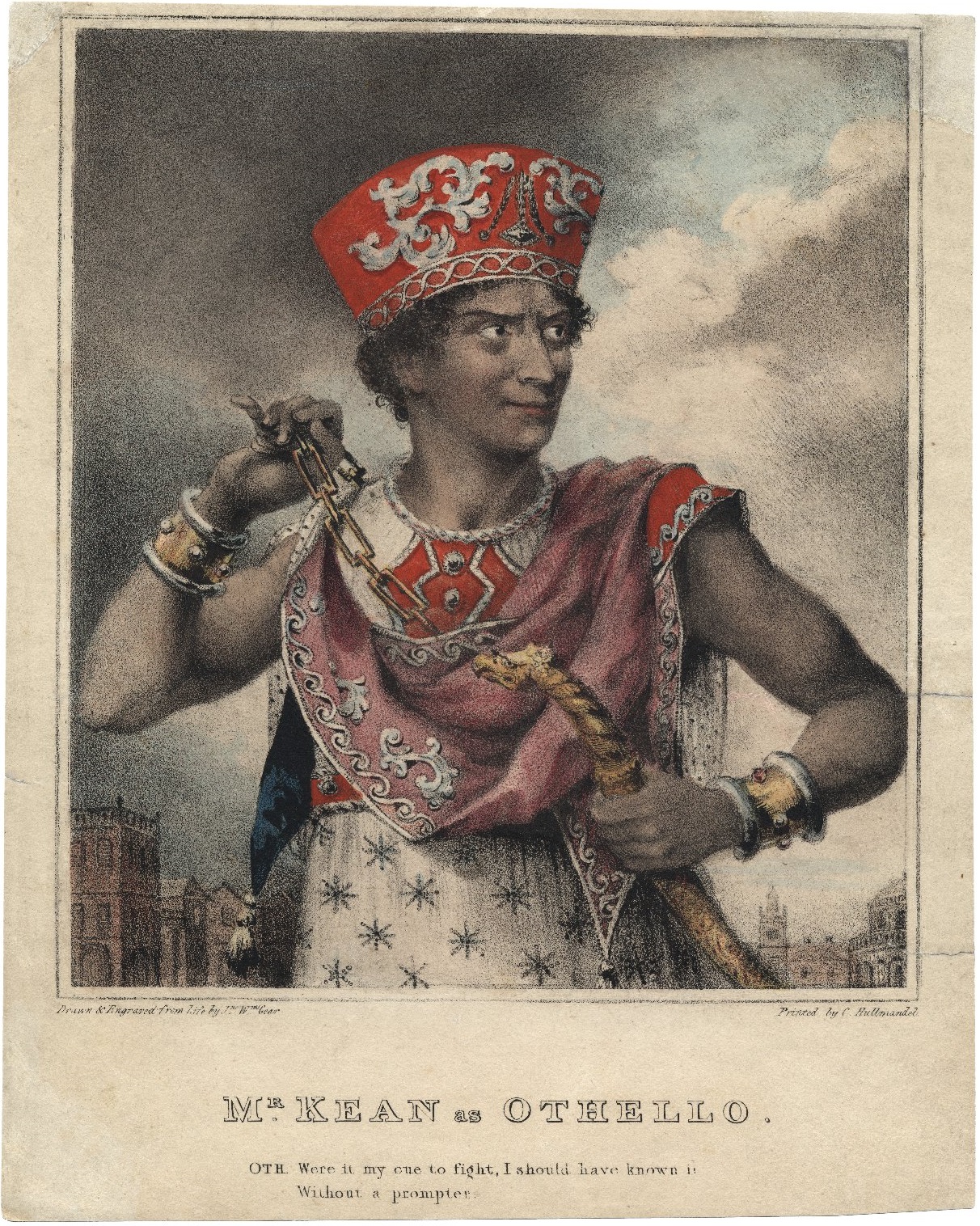
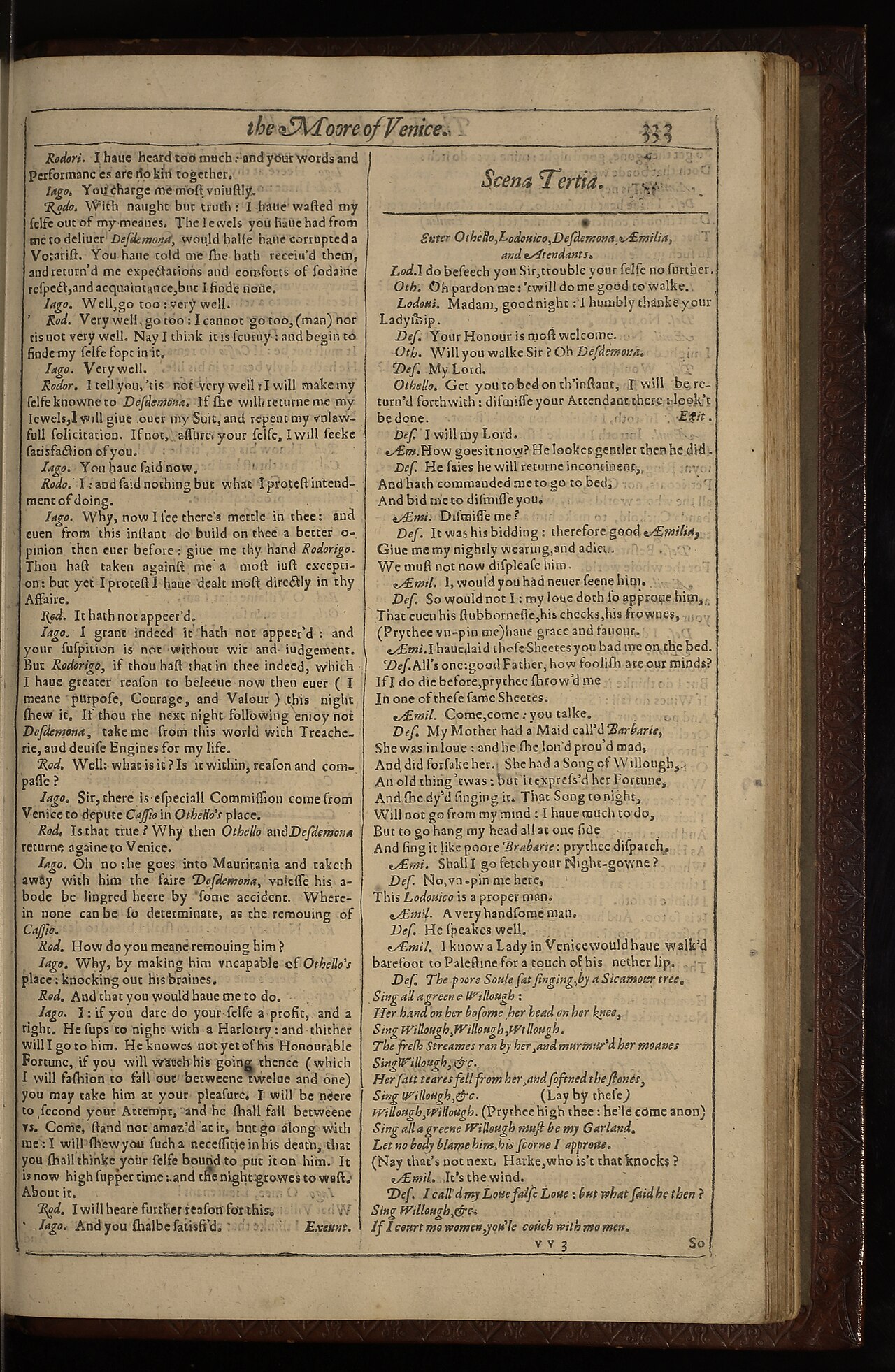
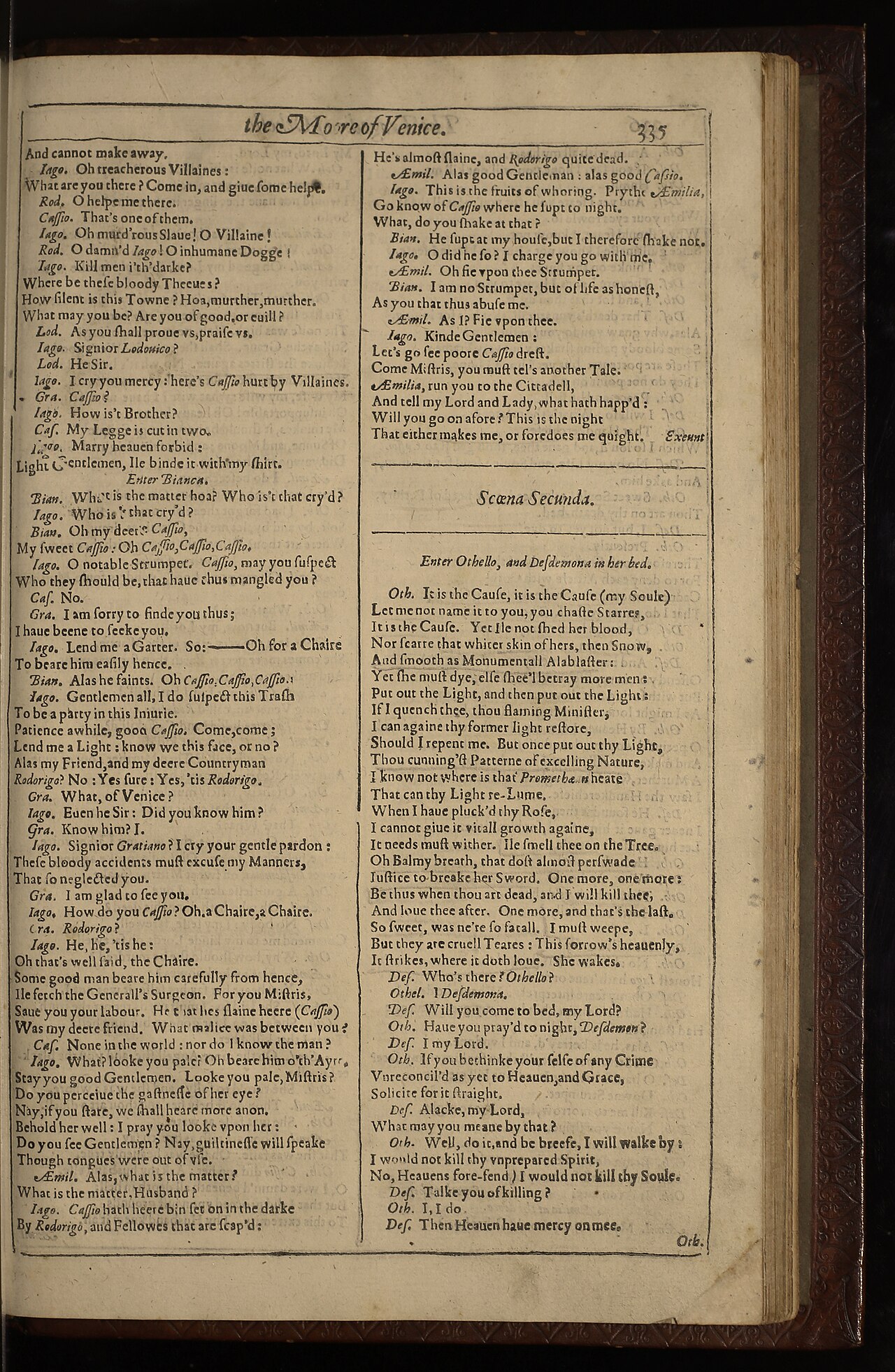
Miami U. Libraries - Digital Collections · No restrictions
The play depicts the Moorish military commander Othello as he is manipulated by his ensign, Iago, into suspecting his wife Desdemona of infidelity. It is widely considered one of Shakespeare's greatest works and is usually classified among his major tragedies alongside Macbeth, King Lear, and Hamlet.
- Author
- William Shakespeare
- Genre
- Tragedy
- Setting
- Venice and Cyprus
Lore & Background
Though not among Shakespeare's longest plays, it contains two of his four longest roles in Othello and Iago. Originally performed by white actors in dark makeup, the role of Othello began to be played by black actors in the 19th century.
Reader's Guide
Othello has been one of Shakespeare's most popular plays, both among playgoers and literary critics, since its first performance, spawning numerous stage, screen, and operatic adaptations. Among actors, the roles of Othello, Iago, Desdemona, and Emilia are regarded as highly demanding and desirable. Critical attention has focused on the nature of the play's tragedy, its unusual mechanics, its treatment of race, and on the motivations of Iago and his relationship to Othello. The play's plot, in which Iago manipulates Othello into believing Desdemona has been unfaithful, leads to the deaths of Desdemona, Emilia, Roderigo, and Othello himself. Shakespeare's innovation included setting the story at the time of a threatened Turkish invasion of Cyprus, a historical context that would have been well known to his original audience.
Did You Know?
- Originally performed by white actors in dark makeup, the role of Othello began to be played by black actors in the 19th century.
- Shakespeare's innovation included setting the story at the time of a threatened Turkish invasion of Cyprus.
Origins, Text, and Place in the Canon
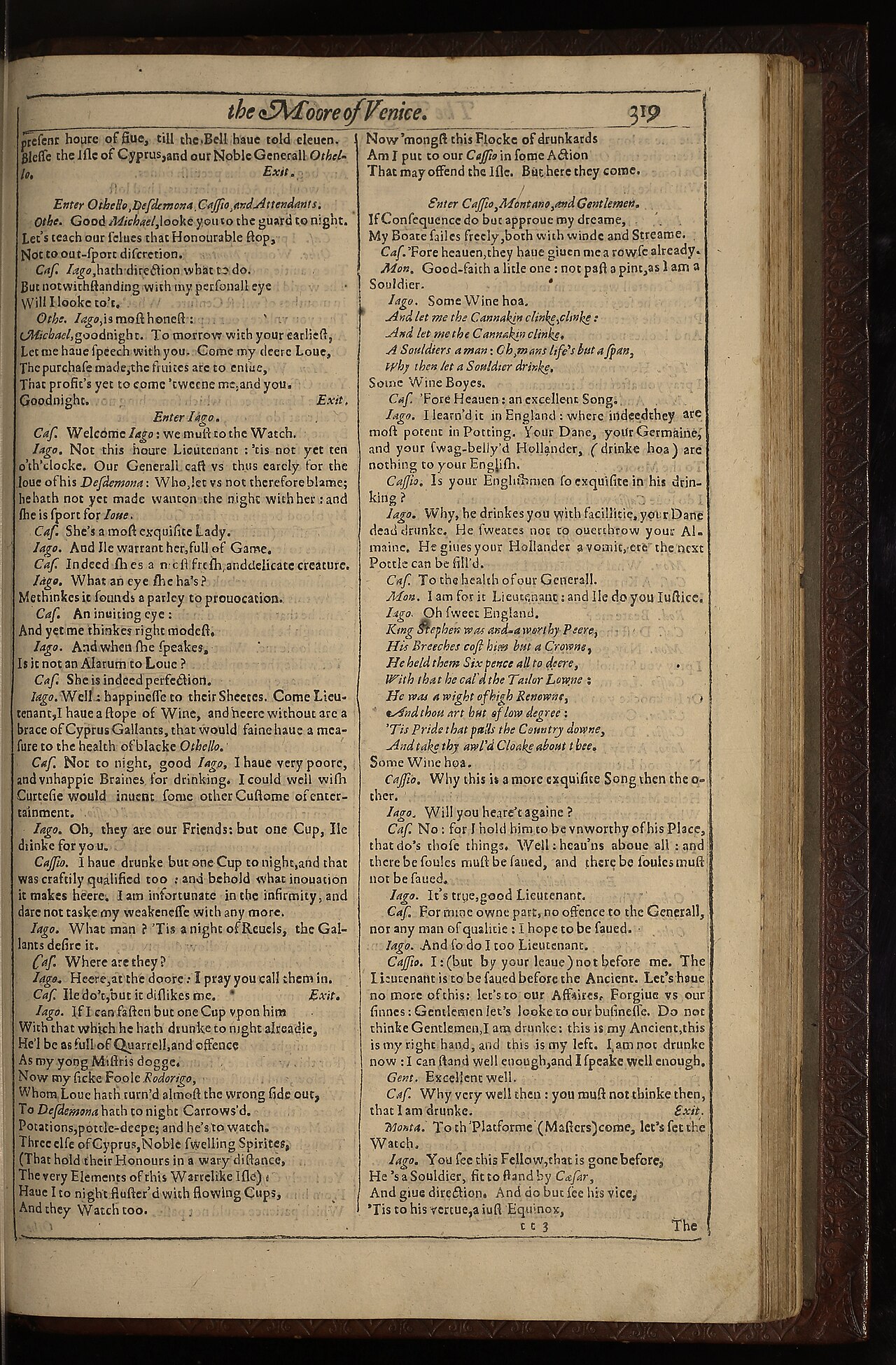
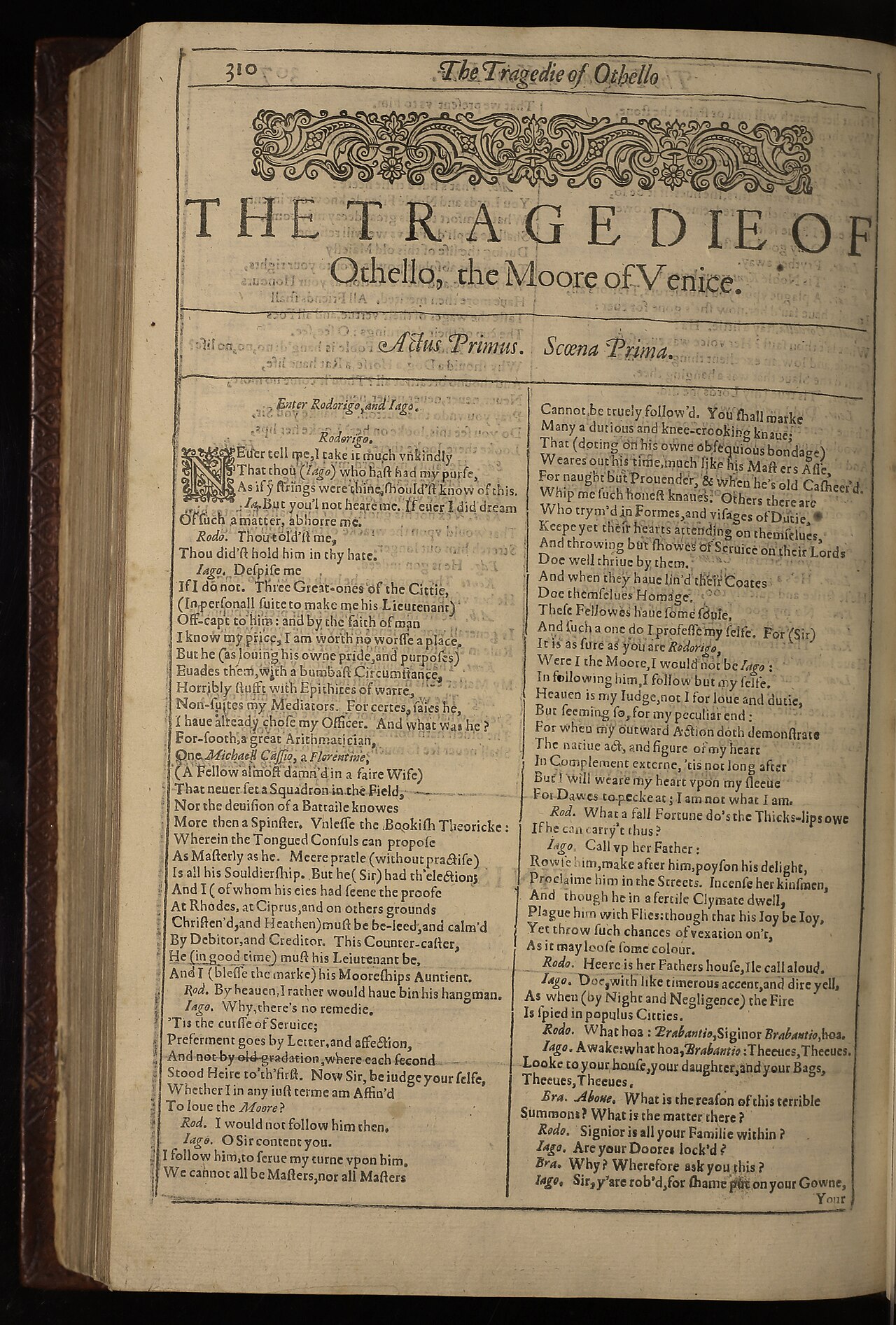
Shakespeare composed Othello around 1603, drawing its narrative skeleton from a 1565 Italian novella by Cinthio. While the basic storyline of a Moorish general driven to murder his wife by a jealous subordinate traces back to that source, Shakespeare reworked the material so thoroughly that the resulting drama stands as a fundamentally new creation. The play is set between Venice and the island of Cyprus, and though it is not among the Bard's longest works, it contains two of his four longest individual roles—Othello himself and the scheming ensign Iago. Notably, the tragedy was never published during Shakespeare's own lifetime. Its textual survival rests on two early witnesses: a single quarto edition printed in 1622 and the First Folio. In the centuries since, critics and audiences have consistently ranked it among Shakespeare's supreme tragedies, placing it in the same tier as Macbeth, King Lear, and Hamlet.
The Architecture of Iago's Manipulation
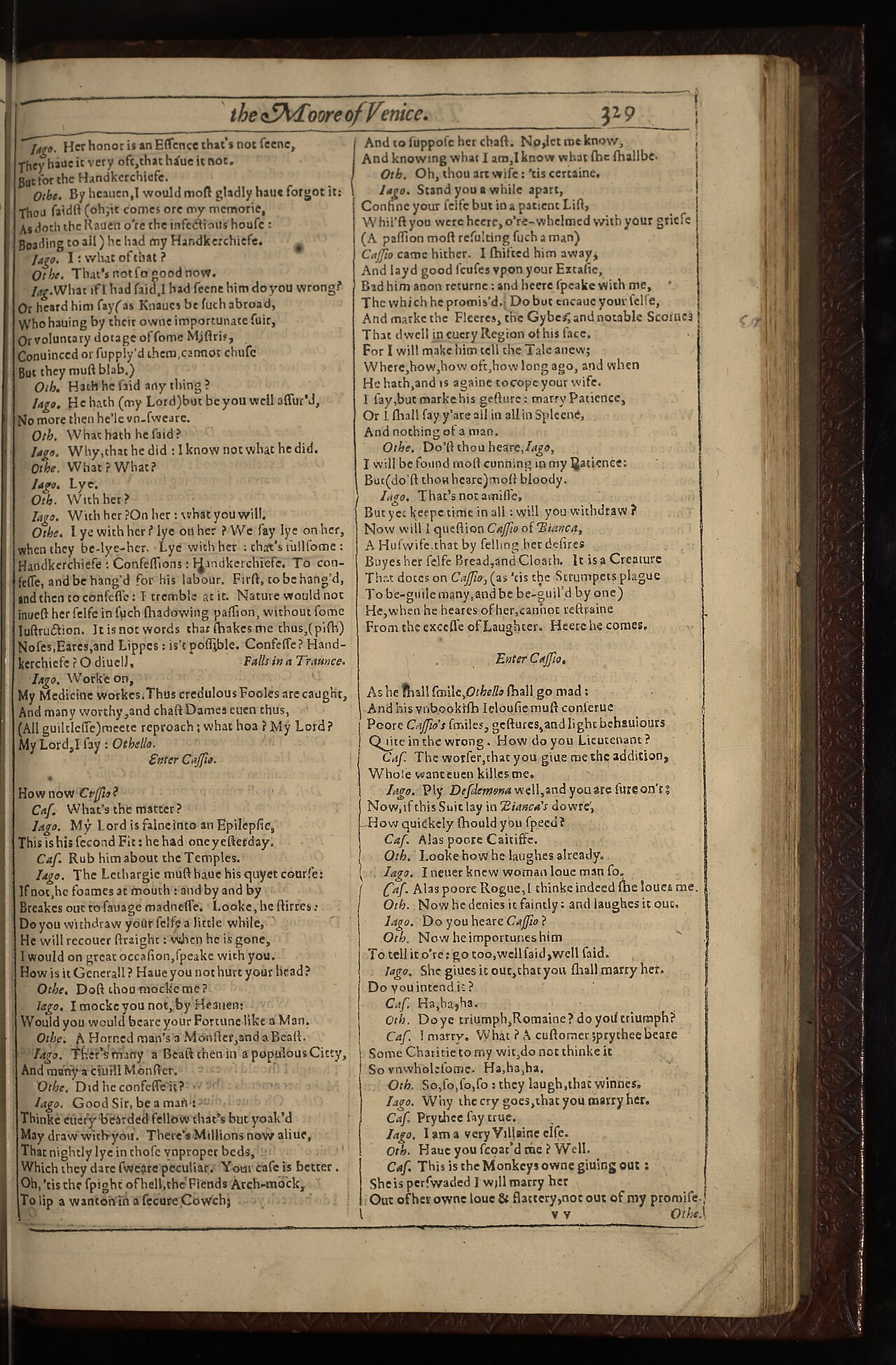
The engine of Othello's destruction is Iago's meticulously layered scheme, rooted in a single grievance: Othello promoted the aristocrat Cassio to lieutenant above him, a decision Iago resents because he believes he is the more capable soldier. From that wound, Iago constructs an elaborate web of deception. He recruits Roderigo, a wealthy suitor spurned by Desdemona, as both financier and unwitting pawn. The pivotal prop in his design is a handkerchief—the first gift Othello ever gave Desdemona. After she drops it, Emilia retrieves it and hands it to Iago, who plants it in Cassio's quarters. He then engineers a scene in which Cassio, goaded by Iago's questions, discusses his relationship with the courtesan Bianca, while Iago whispers her name so softly that Othello, watching from the shadows, believes the conversation concerns Desdemona. Bianca's public accusation that Cassio has passed her a used token seals Othello's conviction. The Moor, now convinced of his wife's betrayal, swears Iago to a mutual oath of vengeance against both Desdemona and Cassio, and elevates his ensign to lieutenant in a single devastating moment of misplaced trust.
Casting, Performance, and Adaptation
From its earliest stagings, Othello has commanded audiences and generated an extraordinary volume of adaptations across theatre, cinema, and opera. Among the four principal roles—Othello, Iago, Desdemona, and Emilia—actors consistently regard them as among the most demanding and coveted parts in the Shakespearean repertoire, each requiring a distinct and sustained emotional architecture. The history of casting the title role carries particular cultural weight. For generations, the part was performed by white actors wearing dark makeup, a convention that shaped how audiences perceived the character's otherness. It was not until the nineteenth century that Black actors began to take on Othello on the stage, a shift that fundamentally altered the play's resonance and opened new interpretive possibilities. This evolution in casting practice reflects broader changes in theatrical norms and continues to inform how directors and companies approach the production today, making the play a living document of performance history as much as a literary artifact.
Critical Debates and Thematic Endurance
Scholars and critics have long debated what makes Othello's tragedy so structurally unusual within Shakespeare's canon. Unlike Macbeth or King Lear, where the protagonist's own ambition or pride drives the catastrophe, Othello's downfall is engineered almost entirely by an external intelligence. Iago's motivations remain one of the most fiercely contested questions in Shakespearean criticism: is his malice rooted in professional jealousy, in a desire to possess Desdemona, or in something darker and less articulable? His relationship to Othello—part subordinate, part mirror, part predator—defies simple categorization. The play's treatment of race, embedded in Othello's identity as a Moor in a Venetian world, has generated ongoing scholarly conversation. Even Brabantio's parting warning to his daughter's husband, suggesting that a woman who deceived her father may also deceive her spouse, functions as a seed of doubt that Iago later harvests. These layered questions ensure that each new generation of readers and audiences encounters the play as a fresh provocation rather than a settled text.
Gallery
Frequently Asked Questions
Who is Othello?
Othello is a Moorish general in the Venetian army who becomes the tragic hero of Shakespeare's play. His story revolves around his descent into murderous jealousy after his wife Desdemona is framed for infidelity.
What is the plot of Othello?
The tragedy centers on Iago, Othello's ensign, who manipulates the general into believing his wife Desdemona has been unfaithful. Driven by suspicion, Othello strangles Desdemona before discovering Iago's scheme.
How does Othello end?
After killing Desdemona, Othello learns Iago orchestrated the entire deception and takes his own life in grief. Iago is seized by authorities, and the play closes with Othello's suicide.
Why is Othello considered one of Shakespeare's greatest works?
It is consistently grouped with Macbeth, King Lear, and Hamlet as one of his four major tragedies. The play's exploration of jealousy, manipulation, and the consequences of racial otherness keeps it central to performance and scholarship today.
More in Literary Novels And Classics 1-15
Spotted an error? Know more?
This is a living reference — every entry is fact-audited, and reader corrections feed straight into our audit queue. Suggest an edit · See this site's audit record